
What Do Children Learn in Grade 1 Math?
Moving from kindergarten to first grade is a major transition time for children. After their year in kindergarten where group learning, play and naptime are the norm; they now must adjust to being in school for a full day, spending much more time sitting quietly at a desk and following a more structured schedule. Within this structure, the first grader takes what was learned in kindergarten and expands upon it. The goals are the same: there are the curriculum focal points set forth by the National Mathematics curriculum that are taught in ways that help the student with reasoning, making connections, following through to logical conclusions, designing and analyzing representations and developing the skills to communicate these points to others. But in first grade there is much more emphasis on individual work and there is testing.
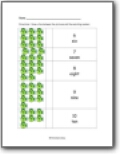
Number sense and numbers and operations are two phrases describing basically the same principles of math. Children begin to understand and use numbers and can read and write numerals up to at least 100 and can count objects up to 100. The students start the year using math manipulatives such as blocks, figurines and cards, then begin to move away from the physical objects to doing more of the work in their heads. By the end of the school year, first graders should be able to do the counting by 2's, 5's and 10's and should be able to start from any number to reach 100. The child should understand the number words and should be able to write them up to the number 12. Comparisons, ordering, equivalent forms and regrouping numbers are all elements of number sense. Students also are expected to know the names and values of coins and how to group them to make equal amounts. First graders are taught about place values and zero as a place holder. They begin to recognize numbers as groups of tens and ones.
|
With comprehension of numbers and number sense comes an ability to understand addition and subtraction. Simple equations in addition and subtraction and word problems using phrases like "take away" or "give to" are introduced. Children also learn that adding and subtracting are inverse operations and can use them to solve problems. The symbols for addition, subtraction, equal to, less than and more than are introduced. They learn about the properties of addition and can show equivalent forms of the same number using charts, diagrams and other materials.
A child begins to understand math concepts as well and can demonstrate how math and measurement are used every day in cooking, shopping and estimating how long it will be until they have lunch, recess or dinner. Measuring cups, rulers, clocks and calendars are used for comparison and practical lessons. Using common objects to measure other objects is an example of using nonstandard units. Temperature and the use of thermometers is another topic covered in the study of measurements.
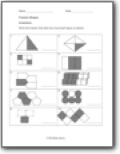
By the end of first grade, students should have an understanding of how geometric shapes can be combined to create a unique sum of its parts. This new whole figure can be described by its own properties or by its parts and can be recognized from various angles and perspectives. Geometry and measurement lessons combined create the ability to give and follow directions to a physical location and allow the students to describe positions using words like "above," "below," "under" and "closest."
The most important lessons learned in first grade math are the skills developed in reasoning, logic and the relationship of the physical world with the world in the child's mind. First graders begin to understand the concept of cause and effect and begin to understand differing points of view. These processes of maturation enrich the child's ability to appreciate the existence of math in daily circumstances.