
What do Students Learn in Grade 2 Language Arts?
By second grade, students understand the basic reading concepts and now must work on improving their skills with them in using them to read more complex texts. The students add to their skills and vocabularies and write with more detail and to a broader audience. Literary elements such as plot, setting and characters are compared within written works and different authors. Students may read different versions of the same story; a contemporary treatment of a traditional folk tale or the story is told from an alternate viewpoint or a different cultural background. Students also may be asked to rewrite the ending of a familiar story. By the end of the year they are using their increased vocabularies and knowledge to improve their oral presentations.
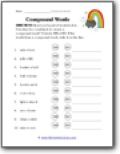
Students in the second grade use their knowledge of phonics and spelling patterns to decode unfamiliar words in texts. They learn how to break words into syllables and can use that knowledge to understand the structure of 2 syllable nonsense words and multi-syllable familiar words. Students also recognize regular and irregular plural forms and are starting to learn simple prefixes and suffixes. Increased vocabularies include the ability to explain common antonyms and synonyms. Second graders also know to break down unfamiliar compound words into their smaller parts to decipher their meaning. They are able to identify some words with multiple meanings.
|
In order to improve comprehension, second graders seek to understand the author's purpose in writing the text and in doing so, also define their reason for reading it. They learn to ask questions which help to clear up any ambiguities they may see in the text. Students learn that by rewriting the text using their own word choices and descriptions without altering it's meaning, they can better comprehend the text. Students can also use other sources such as diagrams or charts to gather more information. They are asked to use their own personal experiences to compare and contrast within the text and across similar selections. Students rewrite the texts using their own words and real world examples to explain unfamiliar concepts and information. Another exercise has the students finding specific examples of declarative, interrogative and exclamatory sentences and discussing the punctuation and usage. They learn to use tables of content, chapter headings and titles to find relevant information in textbooks.
Second graders are expected to write sentences that make sense and are written to satisfy a specific purpose. They learn to gather information, organize it, write an outline, a first draft, make revisions and then edit further when necessary. They understand they need to keep related ideas together and stay focused. Students are expected to use dictionaries, thesauri and atlases for reference and are expected to write legibly. In addition to writing expository papers, students are expected to write a friendly letter following contemporary conventions.
At the second grade level, students are expected to recognize sentence fragments, run-on sentences and complete sentences. Students should use the correct word order in writing and speaking. They should recognize nouns and verbs and their proper usages. Punctuation: commas, quotation marks, periods, question marks are to be used properly. Spelling and capitalization should also be used accordingly.
Second graders should be able to tell a personal experience or present a story. The recitation should have a logical beginning, middle and conclusion and should incorporate typical story elements. Students should also be able to present a researched topic with information gathered from more than one source.
For students in the second grade, reading, writing and oral presentations are becoming more sophisticated and structured. They are able to read silently and independently and can sound out words and decode meanings on their own using expanded skills and strategies. They have been introduced to poetry, drama and grade-appropriate literature and they have developed skills to understand and explain the meanings found within.