
What Do Students Learn in Grade 3 and 4 Science?
Students in these grades learn about the scientific processes already introduced in the earlier grades and then take things even further. Not only do they learn by observing and identifying, classifying, measuring, sequencing or ordering, inferring, predicting and communicating, they learn to interpret data, control a variable, formulate a hypothesis and can formulate and use a model.
Through their studies they learn that they may need to repeat observations to ensure accuracy and even though they may try to do everything the same way, results may vary due to inaccuracies of the person doing the experiment, the things being tested may be slightly different or members of the team may do things differently. Students will note the difference of evidence versus opinion and find that scientists only claim something as fact if it can be confirmed with observations.
|
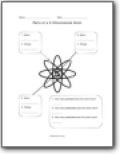
Third grade science students may study sound and light energy for their Physical Science lesson or they may take the study of energy and matter further than the earlier class could take it. Energy is the focus of the lesson either way and students use the scientific processes to be able to predict the outcome of an experiment and compare their actual results to that prediction. They learn the properties of light and learn that the energy comes from the Sun to the Earth in the form of light. In fourth grade, students take the concept of energy storage and conversion and through experimentation learn how the conversions take place. They study magnets and electromagnetic fields and study electric current. Throughout the experimentation, students use scientific processes to take down measurements, predict outcomes of experiments that are then proven true or found to be false. They collect that data and analyze it to come to a conclusion they can back with their observations.
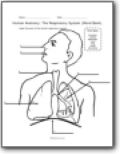
In studying Life Science, students in the third grade may concentrate on animal adaptations to the environment and then the next year study the need for all organisms to absorb energy and matter to exist. These lessons are natural progressions from the simplest lessons learned in kindergarten science in which students made a scientific determination as to whether an object was living or non-living. In addition to building on knowledge gained in Life Science studies, these students use important lessons from across the curriculum to make their projects work. They use numerical data to describe and compare objects and events and make graphs using that data. They may make charts and they try to predict outcomes based on probabilities, all aspects of mathematics curriculum. In communicating their results or by reading and following instructions, students are putting to practical use the lessons learned in Language Arts.
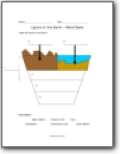
Earth Science lessons for the third grade can be the study of the movement of the objects in the night sky. Students learn why the stars appear to move in the sky and why different stars and constellations can be seen only in certain seasons. In fourth grade, students learn about rocks and minerals, geology and how the Earth's surface can change over a long period of time or overnight. The power of the water on the Earth's surface has the ability to shape and alter the world we live in. The rapid movement of a land mass in the event of an earthquake or landslide can have a massive effect on mankind. Data collection, the ability to control or not control a variable, and modeling are important aspects of this branch of science. In real world applications, these lessons matter. According to the National Science Teachers Association, these early experiences in science develop problem-solving skills that open the door to participation in an increasingly scientific and technological world.