
What Do Students Learn in Grade 5 and Grade 6 Science?
In fifth and sixth grade science classes the students continue to build on the lessons from earlier grades. While in the second grade the lesson may have studied vertebrates or mammals, the older students are ready for the challenge that studying the human body represents. The experiments are of their choosing and the students develop and write their own questions to be answered through experimentation and observation. These science projects put the students' accumulated knowledge to work as they use mathematics and language arts lessons to formulate questions and calculate answers using charts, graphs and diagrams.
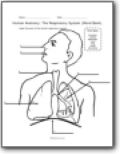
Students in fourth grade science may have studied the cells that make up plant life; in fifth grade they study human cells and how they work together to form the systems that sustain life. They also may take the results from their studies in Physical Science that gave them information on elements, atoms and chemical reactions and apply them to the study of how the human body uses and stores energy. They use anatomical models and charts to learn the sequential steps of the digestive system; circulatory system and they may do experimentation to discover what effect certain foods have on the body. In doing so, they have planned a simple investigation with dependent and controlled variables. As they follow through with their experiments, they record the data, make observations and they are able to draw conclusions based on their results.
|
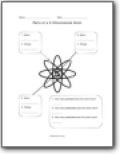

Fifth grade Physical Science lessons include the study of elements; chemical reactions and can also include electricity and its properties. They learn that all matter is made up of atoms and that atoms form molecules. They study the properties of solids, liquids and gasses and experiment with chemical compounds they see or use every day such as sugar or salt. Students study magnets and magnetism, electricity and electromagnetism. They may build their own compasses and work with switches and current. This work has them choosing the appropriate tools and using safety precautions to carry out investigations. At the end of the unit, students write individual reports recording their results and what they learned from the project.
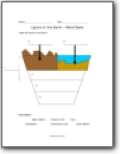
In some sixth grade classes, emphasis is put on Earth Science and the structure of our planet. The students study plate tectonics, earth layers and study the effects of major geologic events on the earth. The students learn about water and its properties, especially in regard to ecosystems and the water cycle. Students on both coasts learn how tides and the oceans formed the beaches and still alter the coastlines. Global warming is currently a hot button issue and students learn about the effect human activity has had on our planet.
Children have a natural curiosity and from the moment they have the chance, they start learning about their environment with a hands-on approach. Fifth and sixth grade science lets students take that curiosity, build on it and discover answers to questions they have formulated based on it. They can choose what problem or question they have, develop an educated guess they want to prove or disprove, and use whatever tools they have at their disposal to perform experiments, gather data and display their results. The students can choose fieldwork; gathering water samples from tide pools or backyard streams. Or perhaps a group of students decides to stay indoors and build a volcano or their own electromagnet. Sixth grade science provides the experience that students need to build the confidence in themselves they need to become participants in a world that is relying more and more on technology and science each day.