
What Do Students Learn in Kindergarten through Grade Two Science?
Elementary school science curriculum varies throughout the school districts, but educators everywhere agree that a hands-on approach to learning which allows a child's natural curiosity to bloom is the best way to teach science. The National Curriculum suggests and supports the idea that science, which invites curiosity and inquisitiveness, should be in the daily curriculum of every student in every elementary school.
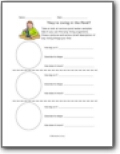
Science in kindergarten classes is as basic as helping the children to understand that things are either living or non-living. A lesson for the class can be as simple as observing and identifying an object and having the children decided whether it is living or non-living by asking a few questions about it. The lesson could be planned for inside or outside and any number of objects can be chosen. As long as the children are involved first-hand and they can participate in the investigation, it is science for them. It facilitates the learning process when a lesson starts out broadly and is based on something the children are familiar with, such as a bug or a rock. Does it grow? Does it eat or absorb nutrients in some manner? Does it move? These questions are all part of classifying an object as living or non-living. Remembering that the students here are very young, the lessons should remain simple. They can make some simple observations, identify the object and classify it. By recording the data, the teacher has added another scientific process called sequencing or ordering.
|
The lessons for first graders can take things a few steps further. The science processes that are to be incorporated into lessons include: observing and identifying, classifying, measuring, sequencing or ordering, inferring, predicting and communicating. These processes are common to all science disciplines, an element which experts say help students learn science best.
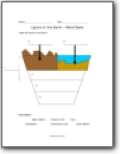
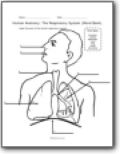
First grade science projects can be built around earth science, life science and physical science. The children can study objects and use the scientific processes to classify whether they are plant or animal, living or non-living and can answer scientific questions posed by the teacher. They can take measurements, make charts or graphs and through inference, does it have offspring that resembles it?, can make decisions about classification. The students can communicate through drawings or verbally their results. A possible project in life science for first graders can be the study of mammals and learning what it takes to classify an animal as a mammal. Second graders can take the processes to the next level and study vertebrates.
An Earth Science project for the same class may be to study the weather. Seasons, clouds, the sun and even the water cycle can all be elements of the lesson. Students can use thermometers to test the temperature inside the classroom and outside. An earth science lesson for second graders may include the basic elements of the solar system: the sun, moon, earth, stars and the planets. Modeling, manipulatives and reading materials bring other disciplines on board this lesson.
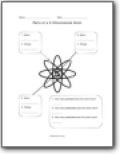
Simple machines may be studied for the physical science lesson for the younger children. The forces of friction and gravity can be exemplified in any number of ways and language arts can be part of the lesson with the introduction of a story about Johnny Appleseed or a book about Isaac Newton. Adding diagrams or trying an experiment with gravity x number of times also includes mathematics. Tying all of these disciplines into one lesson is a great way to make it memorable. Second graders are ready for more information and more scientific processes, so they may study matter and its properties.
At first glance, science in kindergarten or first grade may seem so simple as to be non-essential, but exactly the opposite is true. It gives the children an opportunity to begin to function as problem solvers, a necessity in every discipline across the curriculum.